What BaseScore measures
BaseScore is a 1–100 normalized risk index that lets you compare any two locations on an apples-to-apples basis, regardless of city size, reporting practices, or data availability. There is no score of 0 — an uncovered location shows no score at all.
It is not a raw crime count. It is a weighted, normalized score.
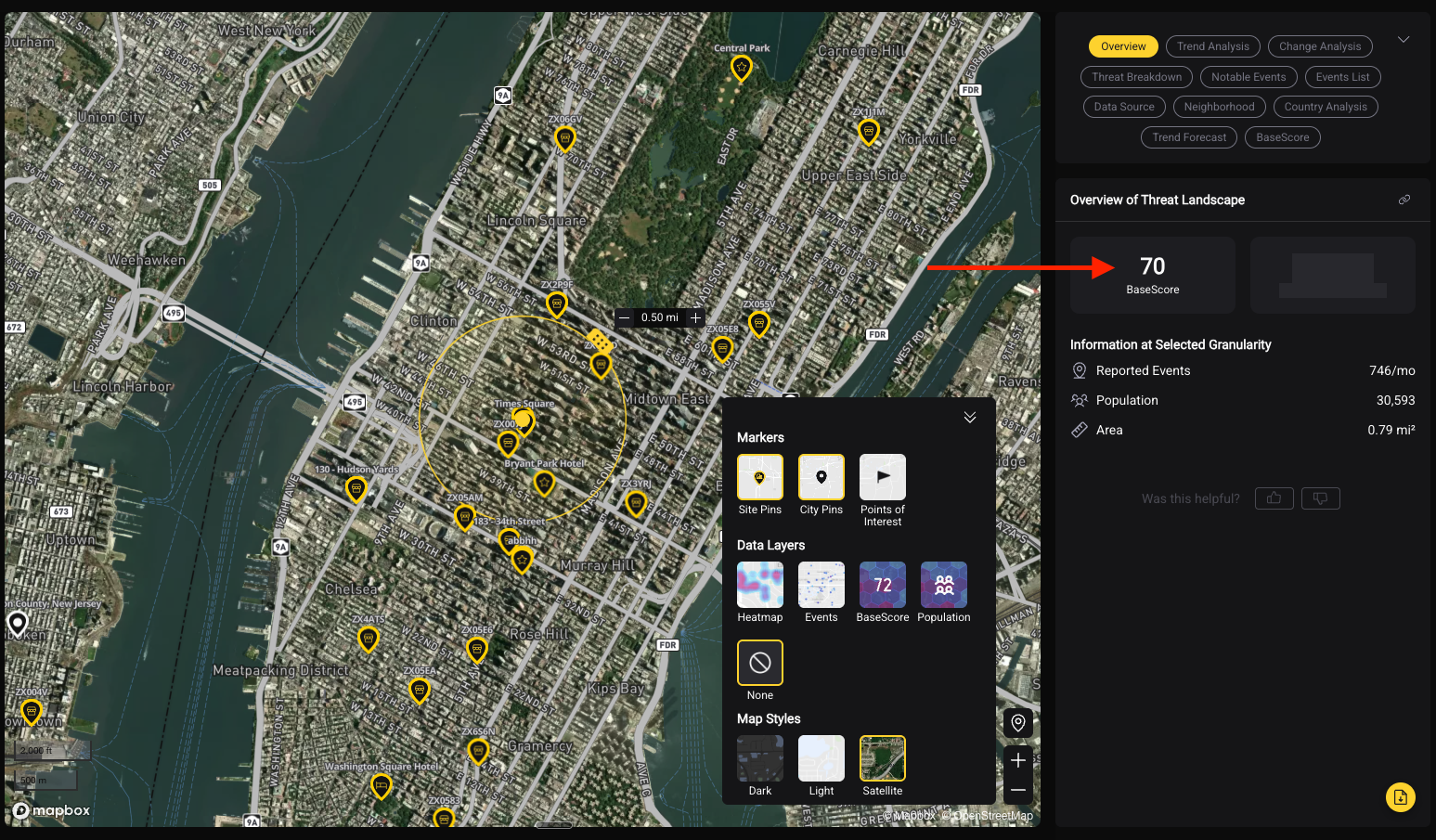
For the tier bands and how to interpret them, see The BaseScore scale.
What it covers
Crime data only. Civil unrest events are tracked and mapped but do not feed the calculation. See the BaseScore scale.
What goes into it
| Input | How it is treated |
|---|---|
| Frequency | How often incidents occur in the area |
| Severity | More serious crimes carry substantially more weight than minor offenses — violent crime is weighted well above property crime |
| Recency | More recent incidents are weighted more heavily than older ones |
Severity weighting is the reason a location with a small number of serious violent incidents scores meaningfully higher than one with a high volume of minor offenses. The score is answering "how dangerous is this?", not "how much gets reported here?"
Scores are normalized by population density and area type, which is what makes cross-location comparison meaningful.
Reading the key drivers
The BaseScore breakdown in the analytic panel decomposes the score by event category. The categories with the highest sub-scores are the primary risk drivers — those are what to focus on.
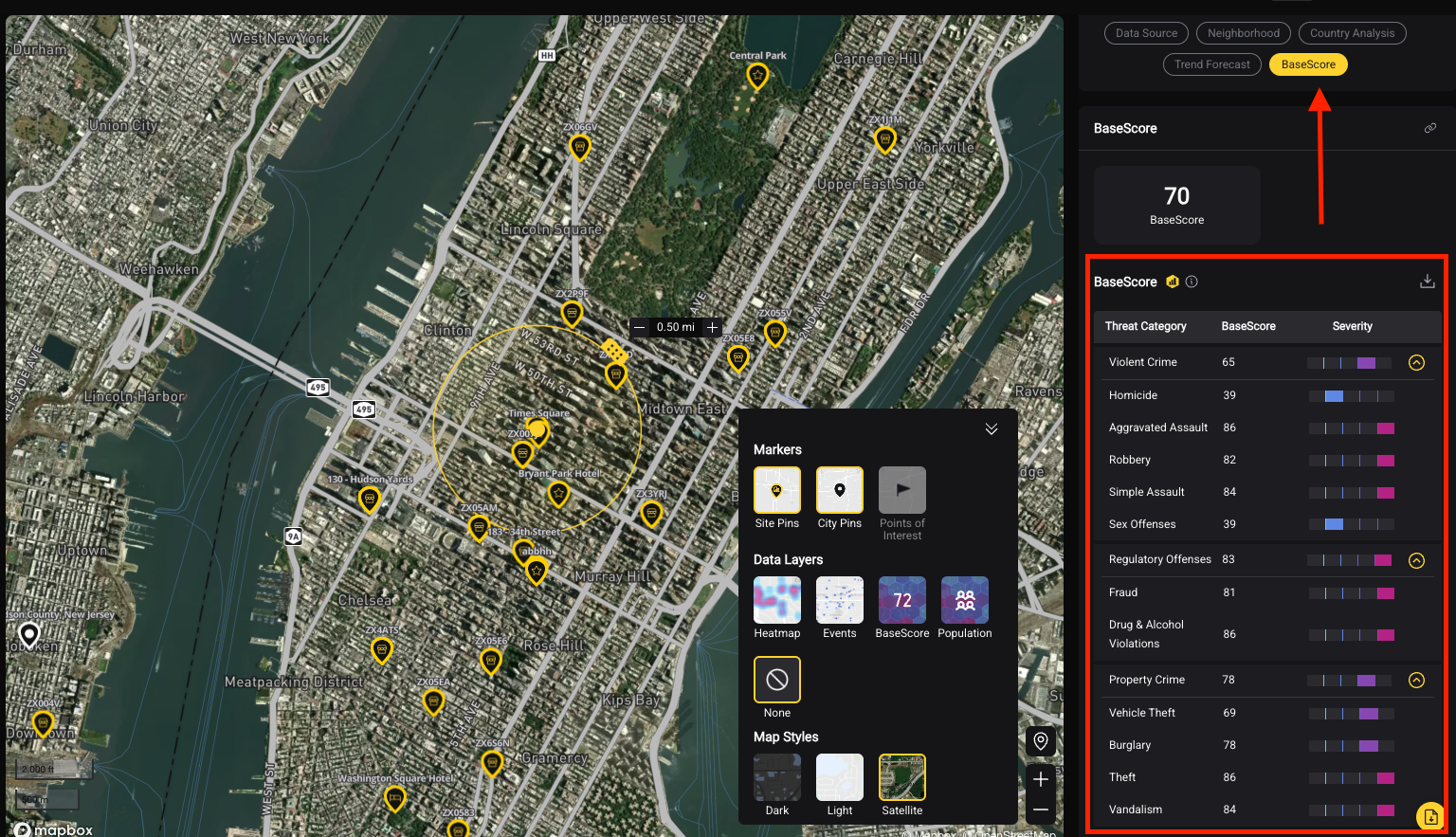
Example: A location with a BaseScore of 58 (Medium), a property crime sub-score of 74 (High) and a violent crime sub-score of 30 (Low) is a property crime environment, not a violent one. That distinction changes how you respond.
How incidents are classified
Different jurisdictions use different terminology. What one department calls "Grand Larceny" and another calls "Theft from Person" map to the same platform category.
The platform applies a standardized threat ontology, using classification algorithms and natural language processing where needed, to translate source-level labels into consistent categories. A comparison between Chicago and Frankfurt is therefore based on consistent definitions rather than raw source classifications.
When a category appears in your Threat Breakdown, it means the same thing regardless of where the data originated.
The three crime groupings
Violent Crime — force or the direct threat of force against a person: Harassment, Simple Assault, Aggravated Assault, Robbery, Extortion, Kidnapping, Sex Offenses, Homicide.
Property Crime — taking or damaging property without direct violence: Theft, Vehicle Theft, Theft from Vehicle, Shoplifting, Vandalism, Arson, Burglary, Trespassing, Fencing.
Regulatory Offenses — offenses against law and regulation that are neither of the above: Fraud, Corruption, Organized Crime, Weapon Violations, Drug & Alcohol Violations, Trafficking of Illegal Goods, Serious Traffic Violations.
The distinction is operational. Teams focused on employee safety weight violent crime higher; teams focused on asset protection watch property crime trends; financial services and compliance-driven organizations care about the regulatory grouping that the other two miss.
Full category lists with IDs and severity weights: Crime categories.
BaseScore across an area
Switch to Hex view to see BaseScore calculated independently for each hex on the map. This lets you see how risk varies block by block, compare your site's hex against its immediate neighbors, and place the location within the broader city landscape.
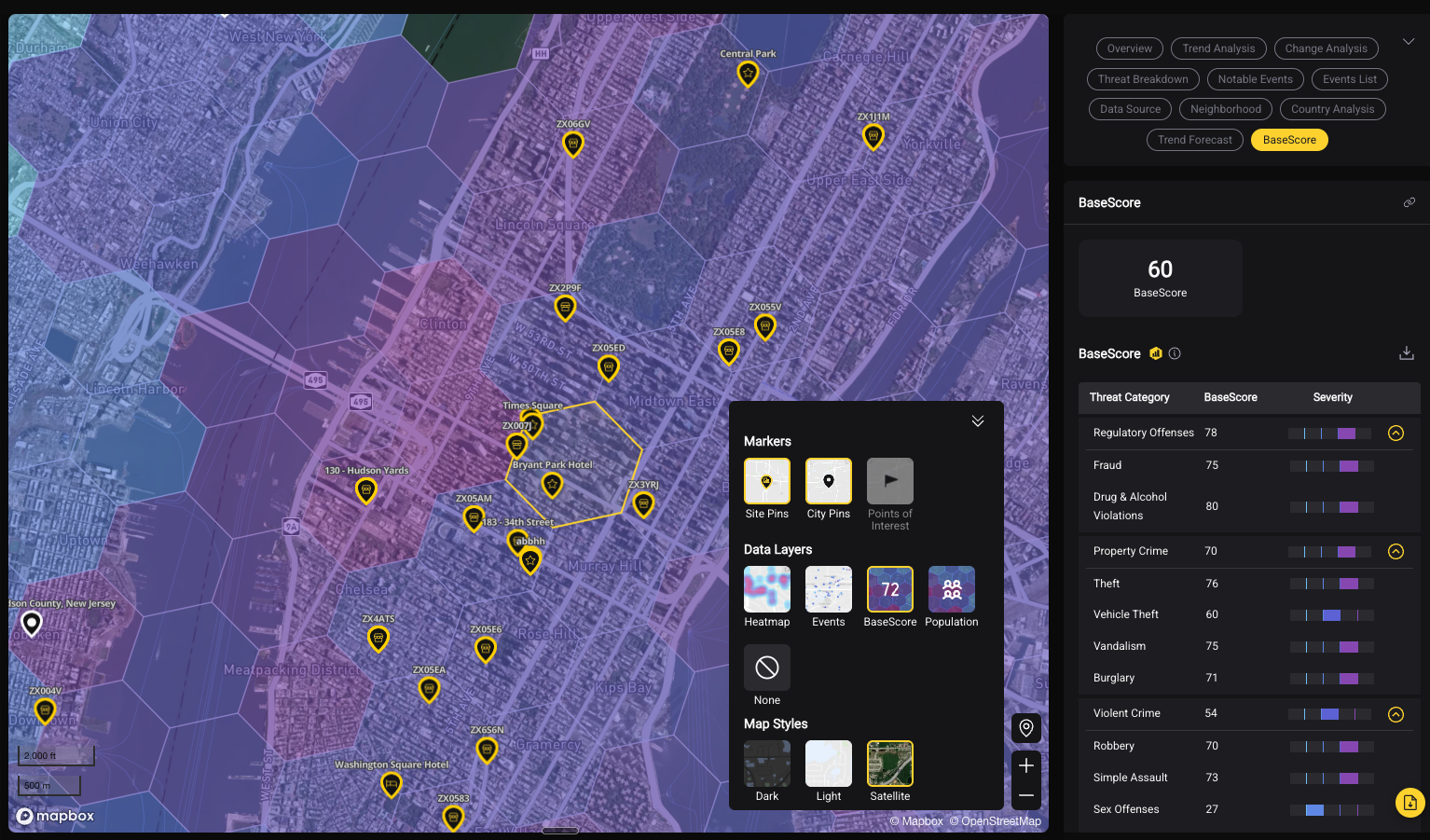
A location in a Medium hex surrounded by High hexes tells a different story than one surrounded by Low hexes. Context matters.
Custom weighting
Standard BaseScore uses Base Operations' proprietary weighting methodology, developed through research and ongoing validation.
Enterprise customers with specific requirements — a healthcare organization needing violent incidents weighted significantly higher than property crime, for instance — can discuss custom scoring with their account team.